Many prefer to buy their glasses the old fashioned way: in person. However, Covid-19 made a drastic impact on the way we shop. Initial phases of the pandemic included strict government lockdowns, causing many clinics and retail stores to close their doors. In-person sales declined while online purchase boomed as the industry shifted gears. By the end of 2020 there was an unbelievable 44% growth in e-commerce.
Although most businesses are now open, many consumers have discovered the benefits of purchasing eyewear online. At one’s fingertips are thousands of products and places to shop, saving time and money. But is there another side to buying glasses online?

Benefits and Disadvantages to Shopping Online
Electronics, medicine, pet food and baby supplies are some of the top items purchased online. However, you may be better off shopping for individual specific items in person, which may include mattresses, shoes, or even things you’ve never tried on before like perfume, clothings and cosmetics. What about eyeglasses? Before you make that decision, consider some of the benefits and disadvantages of buying glasses online.
Benefits
- Saves money. Consumer Reports estimates an average of forty percent savings when purchasing glasses online.
- 24/7 Shopping: Shop from your location on your schedule. Precious weekends are not spent running from store-to-store.
- No crowds. No fighting for a parking space or socially distancing when you shop online.
- More Options: Items in store are limited. Online shopping means finding exactly what you want locally or internationally.
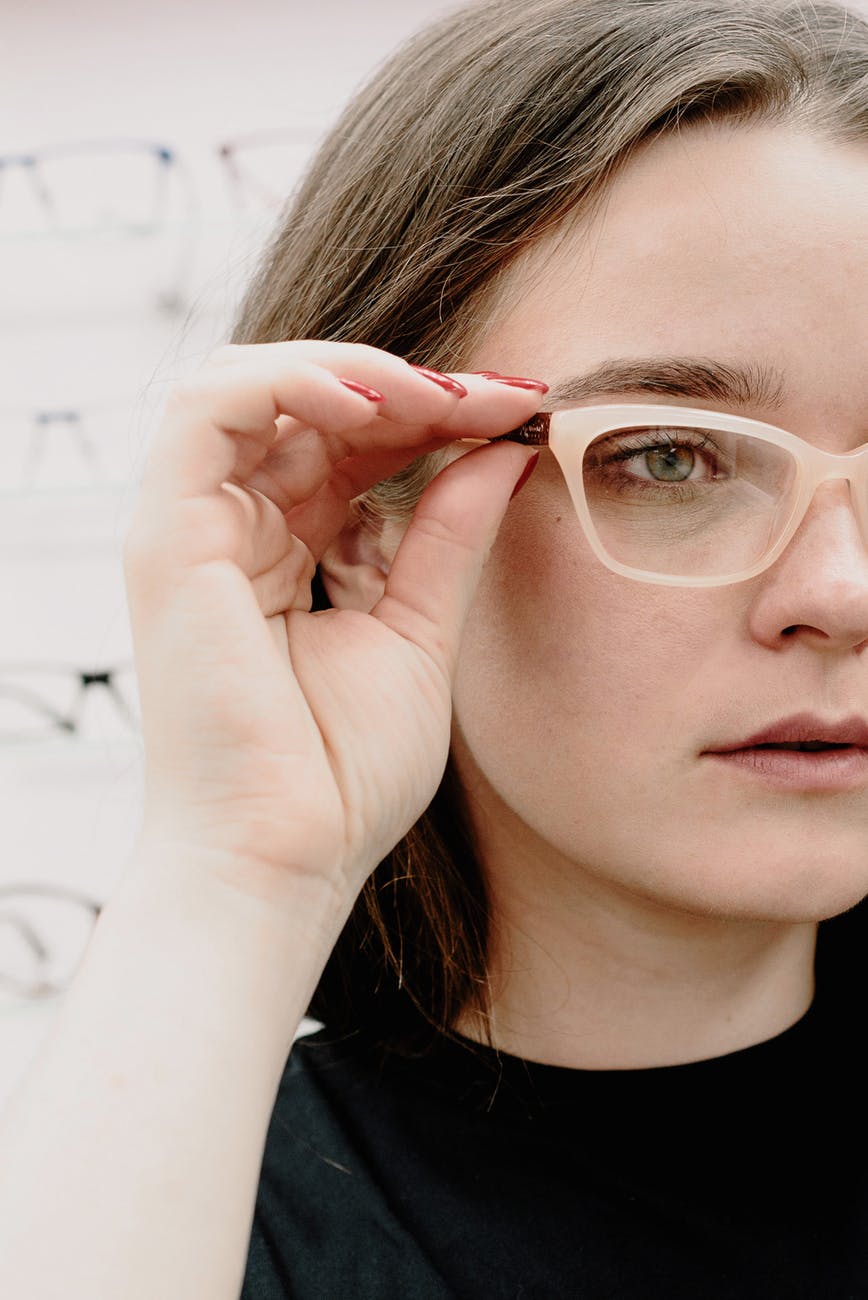
Disadvantages
- You can’t try them on. Size, fit, and color are key when selecting the perfect pair of glasses. Many eyewear companies now offer virtual try-ons before purchasing. But you may find a photo or live try-on doesn’t always show every detail or how the glasses feel when wearing them.
- Missing the human touch. Many prefer personalized shopping experiences. You can explain to a real-live human what you are looking for. An optician at times will say, ‘no, that color doesn’t do anything for you, try this instead.’ This can prove to be valuable when presented with endless colors, shapes and sizes.
- Where are the opticians? Many online retailers can make the experience as carefree as buying any other accessory.. They can make it fun by offering online style quizzes or a virtual styling consultation. But eyeglasses are not accessories, they are medical devices. So do your research and ask if the company staffs qualified opticians who can guide you through your purchase. Does the company identify themselves as a medical eyewear provider or a styler retailer that happens to sell medical devices? Do they train their employees on the latest lens technology, eyewear, materials, troubleshooting or does style take precedence?
- No accurate measurements. Let’s analyze this one in more detail.
Measurements
Every lens has a sweet spot, or a part of the lens that is clearest. This should be directly in front of the pupil. Rings are used to measure just where that sweet spot is located. If the sweet spot is above, below or to the side of the pupil, it can lead to eye strain or blurred vision. Think headaches, nausea or even double vision – no fun. In order to get that sweet spot right in front of the pupil, two key measurements are taken.

Two key measurements:
Vertical:
Pupillary Distance (PD) :
The distance between the pupils.
Horizontal:
Optical Center (OC) / Seg :
The horizontal measurement from the center of the pupil to the bottom of the frame.
Purchasing glasses online means these critical measurements cannot be taken. So how are glasses sold online skipping this critical step? A little something called predictive measurements, or an average measurement for men and women. Now, the one-size-fits-all approach may work for elastic clothing or baseball hats, but this is definitely not the case with prescription eyeglasses. Why?
The Art of Accuracy
Standards keep us safe. Car manufacturers must meet specific industry standards during the manufacturing and testing process. If not for those standards, we may see more Cadillacs like Johnny Cash sang about in ‘One Piece at a Time:
“Til we tried to put it all together one night
And that’s when we noticed that something was definitely wrong.
The transmission was a ‘52 and the motor turned out to be a ‘73.
And when we tried to put in the bolts all the holes were gone.”
To ensure prescription lenses are precise, eyewear standards were created beginning in 1918 called American National Standards Institute (ANSI). These ANSI standards follow the laws set out by the FDA, with the purpose of protecting the safety of the wearers. They dictate everything from a lens’ impact resistance to tolerance, or the maximum a lens can be ‘off power.’ Notice below the specific limitations.
Lens Power – Studies found that most people cannot differentiate lens power less that an eighth of a diopter (0.12D). This power became the standard lens for prescription eyeglasses. This is called tolerance.
Measurements – Seg heights and are required to be within 1 millimeter. Pupillary distance, as a general rule, should be within 1-2 millimeters.
The human body has the incredible ability to adapt, and it has been doing so for eons. It can acclimate to a wide range of altitudes, temperatures and diet changes. The same is true of our eyes. They too have remarkable means to compensate or make due. But some eyes are more sensitive than others.
Super smellers or hyperosmia may be able to detect minute aromas in a glass of wine. A supertaster makes up about 25% of the population and may experience an increased sense of taste and intensity that the average eater. What about our other senses like sight? Are there some who are more sensitive to vision changes than others? The short answer is yes.
Visual sensitivity may be evident in a variety of ways:
- Changes in the prescription.
- Lens material changes. Example: some are not able to adapt to wearing polycarbonate lenses.
- Frame fit- vision is affected when a frame slides down the nose.
- Measurement changes: even when the change is subtle, incorrect measurements can make a pair of eyeglasses unwearable for some.
You may choose to buy glasses online but keep in mind some of the risk factors. The American Optometric Association ordered 200 pairs of eyeglasses from 10 different online retailers. The results?
- Of the 200 pairs ordered, only 154 were received
- 44.8% were incorrect prescriptions or had safety issues
- 29% had at least one lens error in the prescription
- 19% failed impact resistance testing, which highlights a major safety issue.
- 25% of children’s lenses failed impact resistance, a huge concern for parents.
Click here to read more about this study.
The Takeaway
Shopping online will continue to be a way of everyday life. And undoubtedly, more and more retailers will attempt to rebrand themselves as eyewear suppliers. But in the words of Ian Malcom, ‘You were so preoccupied with whether or not you could, you didn’t stop to think if you should.’

There are many benefits to buying glasses online, but it is not for everyone. Those with strong prescription, sensitivity to lens or measurement changes, as well as those who are difficult to fit may find buying online to be a disappointing experience. So do your research into the company, weigh the pros and cons, and remember, it’s your eyes, you deserve to see 20/20.
 The In-sight-ful Optician